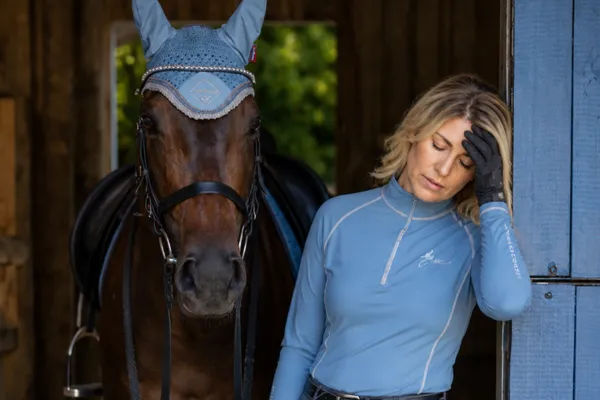
Burnout in Equestrian Life: When Passion Starts Feeling Like Pressure
“If it costs your mental health, it’s too expensive.”
As equestrians, we are often taught that commitment is everything.
Early mornings. Late nights. Riding through exhaustion. Competing despite nerves. Showing up for your horse no matter what.
And while discipline is an essential part of growth, there is a fine line between dedication and depletion.
Many riders wear exhaustion as a badge of honour.
“I’m just busy.”
“It’s part of the sport.”
“I’ll rest after the next show.”
“My horse needs me.”
Sound familiar?
The problem is that burnout doesn’t arrive dramatically one day. It builds quietly over time through chronic stress, emotional overload, physical fatigue, pressure, perfectionism, and lack of recovery.
And because equestrians are often highly driven, responsible, and deeply emotionally invested, burnout can become normalised.
Until one day, the thing you love most starts to feel heavy.
What Is Burnout?
Burnout is not simply feeling tired after a long week.
Burnout is the result of prolonged physical, emotional, and mental stress without adequate recovery.
It happens when your system has been operating in survival mode for too long.
For equestrians, this can come from:
Constant competition pressure
Financial stress associated with horse ownership
Managing work, family, and horses simultaneously
Fear of disappointing coaches, owners, or yourself
Injury setbacks (yours or your horse’s)
Perfectionism and self-imposed standards
Emotional caregiving fatigue
Unlike many other sports, equestrianism doesn’t stop when you leave the arena.
The horse still needs you.
Which means recovery often gets pushed to the bottom of the list.
Why Equestrians Are Especially Vulnerable to Burnout
Horse people are not casual participants.
This is a lifestyle, an identity, and for many, an emotional lifeline.
That passion is beautiful—but it can also make boundaries difficult.
Riders often struggle to distinguish between:
commitment and overcommitment
resilience and self-neglect
ambition and overextension
We convince ourselves that pushing harder is the answer.
But sometimes pushing harder is precisely what is draining the system.
The irony?
The harder you push through burnout, the worse your performance becomes.
Your focus narrows.
Your patience shortens.
Your confidence dips.
Your body becomes tight, reactive, and fatigued.
And your horse feels all of it.
5 Burnout Warning Signs Every Rider Should Recognise
Burnout doesn’t always look like collapse.
Sometimes it looks like functioning… just badly.
1. You’re Irritated by Small Things
You snap at your horse for minor mistakes.
You feel unusually frustrated with your coach, groom, family, or fellow riders.
Small setbacks feel enormous.
This is often one of the earliest signs that your nervous system is overloaded.
2. You Keep Getting Sick or Run Down
Frequent colds, headaches, muscle tension, digestive issues, or lingering fatigue can all be signs that chronic stress is suppressing your immune system.
Your body always keeps score.
3. You Push Even Harder
This surprises many riders.
Instead of slowing down, burnt-out equestrians often double down.
More lessons.
More training.
More goals.
Less rest.
This is especially common among high achievers who derive identity from productivity.
4. Riding Feels Like Obligation Instead of Joy
You love your horse—but lately, everything feels like another task.
You dread going to the yard.
You feel guilty for not wanting to ride.
You fantasise about “just taking a break.”
Pay attention here.
Loss of joy is significant information.
5. Your Confidence Drops for No Obvious Reason
Burnout can masquerade as a confidence problem.
Suddenly you second-guess yourself, hesitate more, overthink simple tasks, or feel emotionally fragile.
Often, this is not a skill issue.
It is nervous system depletion.
The Equestrian Trap: “But My Horse Needs Me”
Yes—your horse does need you.
But not as a depleted, resentful, exhausted version of yourself.
Your horse benefits most from a rider who is regulated, emotionally available, focused, and grounded.
Taking care of yourself is not selfish.
It is part of horsemanship.
A dysregulated rider creates a dysregulated environment.
A well-resourced rider creates safety.
How to Prevent Burnout as an Equestrian
Burnout prevention is less about grand gestures and more about daily recovery.
Small moments matter.
Build Micro-Recovery Into Your Day
Try:
5 minutes of breathing before mounting
A short walk without your phone
Proper hydration
Protein-rich meals after riding
Stretching after yard work
10 minutes of quiet decompression before bed
These are not luxuries.
They are regulation practices.
Schedule Recovery Like You Schedule Training
You would not expect your horse to train at full intensity every day.
Why do you expect that from yourself?
Recovery needs to become part of your programme.
Ask yourself:
When do I actually switch off?
What replenishes me?
Where am I chronically overcommitted?
Reassess Your Standards
Sometimes burnout is not caused by workload alone, but by the pressure attached to it.
Ask:
What expectations am I carrying?
Are they realistic?
Who am I trying to prove myself to?
Perfectionism is expensive.
Learn to Listen Earlier
Do not wait until your body forces the issue.
Burnout whispers before it screams.
Notice:
irritability
emotional numbness
dread
fatigue
loss of enthusiasm
These are signals, not weaknesses.
Final Thoughts
Equestrian sport asks a great deal from us.
But sustainable success is not built on chronic depletion.
You do not have to earn rest.
You do not need to collapse before you are allowed to recover.
Protecting your mental energy is not quitting.
It is wisdom.
Because if your passion is costing your mental health, it is simply too expensive.
And your best riding will never come from burnout.
It will come from a well-supported mind, a regulated nervous system, and a rider who knows how to care for both horse and self.
Ready to strengthen your mental resilience as a rider?
Book a session with Linda at Forging Ahead Mental Skills Coaching here: https://forgingahead.co.za/schedule-an-appointment
Join the Academy monthly membership for ongoing support and rider development: https://forgingahead.co.za/academy
Or start with the free Facing Down Fear 7-Day Challenge: https://forgingahead.co.za/facingdownfear